You’re sitting on the fence about whether to put your child in art classes. I know the feeling as I’ve watched a lot of parents stand on it.
Maybe it’s the schedule. You’re already driving to soccer, piano, and the orthodontist. Maybe it’s the money. You’ve got a drawer full of crayons at home, so why pay someone else? Maybe it’s the worry you’d never say out loud: my kid isn’t really the artistic one. Or the quiet suspicion that this is a nice hobby, not a real skill, and your kid will lose interest in three weeks anyway.
All of those are fair. Let me walk you through what’s actually true.
“But my child isn’t very good at art”
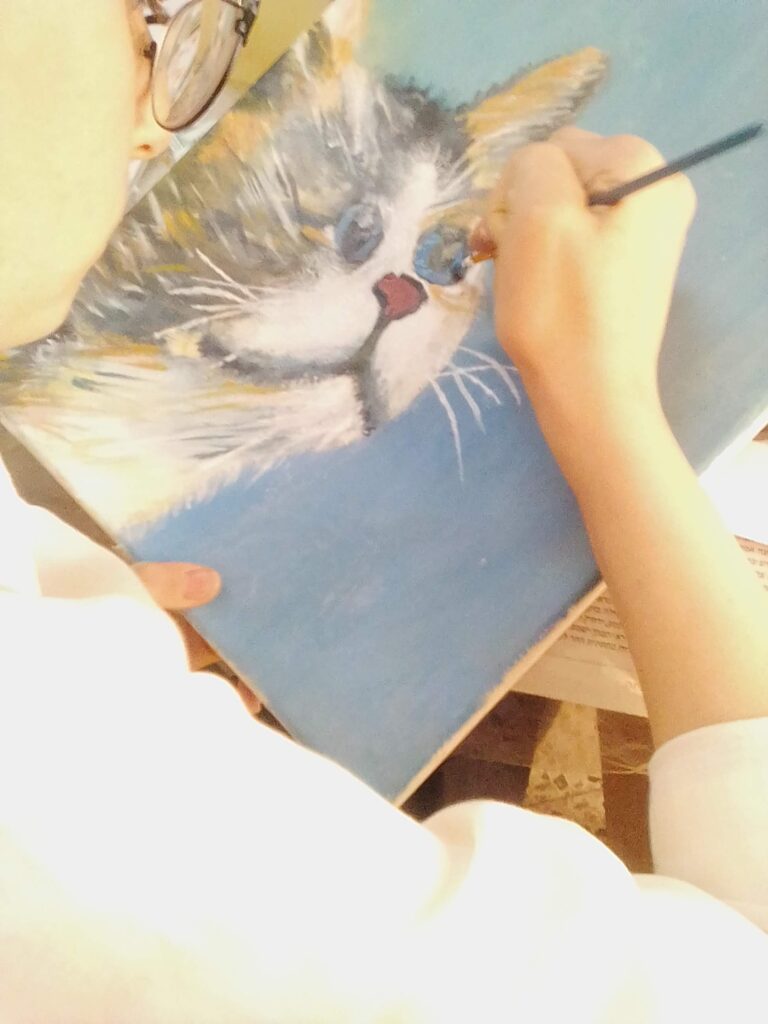
I once had a mother enroll her daughter and tell me, almost as an apology, that the girl wasn’t very good. Her sister was the talented one. You could hear the ranking she’d already done in her head, the same sorting that leaves so many parents wondering whether their child is talented in the first place.
A few classes later, that “not very good” daughter was drawing and painting better than her sister. The mother was astonished.
Nothing magic happened. I didn’t discover a hidden genius. I taught her foundational skills, and foundational skills show. That’s the whole secret. Art is a skill, not a talent you’re born holding. The kid you’ve decided isn’t artistic is usually just a kid who hasn’t been taught how yet.
What “foundational skills” actually means
Here’s the difference between an art class and a YouTube paint-along.
When a child copies a tutorial, they end up with one finished painting and no idea how they got there. Hand them a blank page and a different subject and they’re stuck. They learned to copy one thing. They didn’t learn to draw.
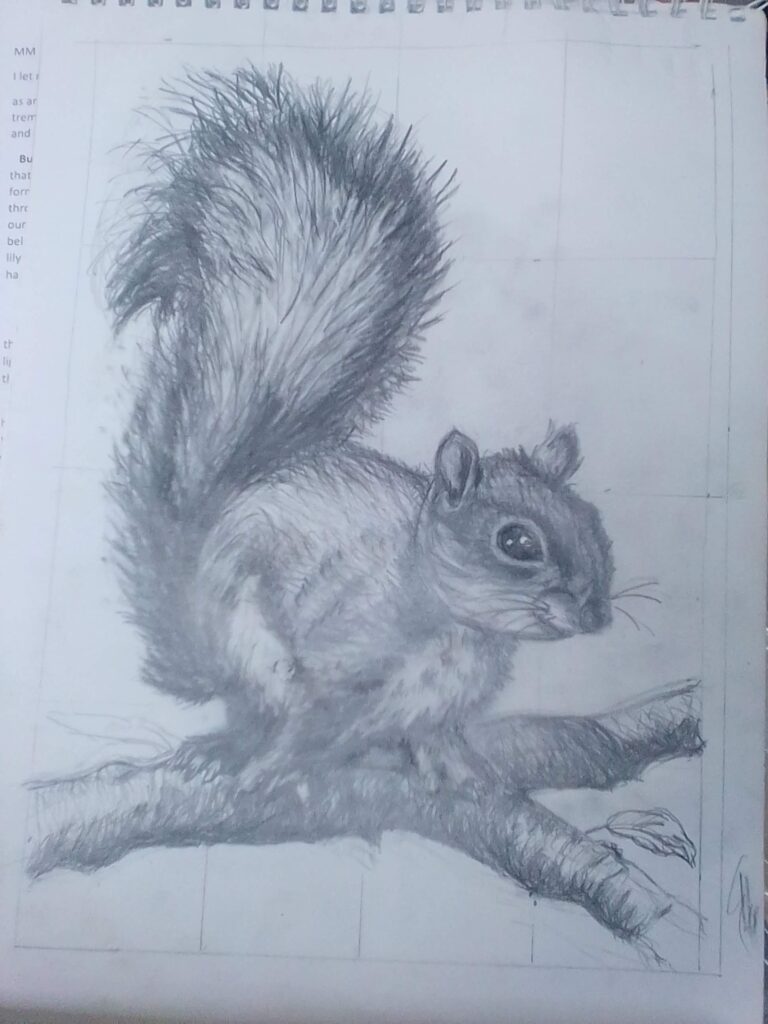
Foundational teaching is the opposite. We teach kids to draw what they see, not what they think they see. This is the part that’s most important. Most people draw the symbol in their head for “tree” or “hand,” not the actual shapes in front of them. Once a child learns to really look, their drawings stop looking like a six-year-old’s idea of a thing and start looking like the thing.
From there we build. Every drawing starts as simple shapes. We teach kids to break a subject down, block it in, then add detail on top while working from a reference. We teach value, so they understand light and shadow instead of flat coloring. We teach proportion, so the head isn’t twice the size of the body. We teach perspective, so a room actually looks like a room.
Put together, that’s the difference between “my kid can copy one painting” and “my kid can draw anything.” One is a party trick. The other is a skill they keep.
Here’s what that looks like in a real project. Say a child is painting a parrot from a photo. We don’t start with the feathers. We start with the big shapes: the oval of the body, the curve of the head, the line of the branch. Then we check proportion, so the head sits right next to the body. Only once the shapes are correct do we block in the values, the lights and darks, so the bird has form instead of looking flat. Detail comes last, never first. By the end, the child hasn’t just made one parrot. They’ve practised a method they can use on anything.
“But we already have free tutorials at home. Why pay?”
Fair question. Free tutorials are everywhere, and some of them are good, but there are real limits to what tutorials can teach, and those limits are the whole point.
The gap shows up the moment the video stops. A child who only follows YouTube paint-alongs can copy beautifully while it’s playing. Pause it, hand them a reference photo, and ask them to create their own painting from it, and that’s where it falls apart. Following along is not the same as being able to create.
Random tutorials also leave random holes. One video skips proportion, another never mentions value, and your child ends up missing the exact foundational skills they need to move forward. So they plateau. They keep making work at the same level and can’t understand why, because nobody taught them the piece that’s missing.
A proper course teaches every skill in the right order, each one building on the last. Your child keeps progressing instead of getting stuck, and they walk away able to draw and paint on their own, without a step-by-step video telling them what to do next.
What age should my child start?
The youngest I teach is four. At that age a child can already draw basic shapes and start using paint properly, so we work on putting shapes together, getting a feel for how the materials behave, and gently training their brain to draw what they see instead of what they think. Those habits sink in early and stay with them for good.
Around six, we start adding detail, building images from shapes, working from reference photos, and teaching value and proportion.
And no, there is no such thing as too old to start. The one tricky case is a child who has already learned the wrong way, drawing from their head with no method, while believing they’re already good. Undoing that is harder than starting fresh, which is why I love a blank slate and why earlier is easier. But if your child is older, they haven’t missed the boat. I teach the same skills at any age, pitched to their level, whatever their background. Anyone can pick this up and become a skilled artist.
“What if they quit in three weeks?”
Real fear. Let me give you the honest version instead of pretending every kid loves every class.
Kids give up on art for predictable reasons:
- The project is boring.
- It’s too easy.
- It’s too hard for their level.
- They’re just copying without learning anything, so they never feel like they’re getting better.
Quitting is almost never a kid problem. It’s a curriculum problem.
When a child is genuinely learning the skills and doesn’t feel limited, they don’t get frustrated. They get confident. They feel proud of themselves as an artist, which is a feeling most kids have never had attached to a pencil before. It’s the opposite of the moment a child pushes the paper away and says “I can’t draw”.
That’s why our projects at letsartit.com are built the way they are. Each one focuses on a specific skill or method, then leaves room for the child to use their own creativity. Each is tailored to the age group, so it’s never too easy or too hard. Each uses different media, so it stays fun. And each project builds on the last, so progress compounds.
A parent can usually see that progress within a few weeks. Not someday. Within weeks.
How do I know it’s a good art class?
Before you enrol anywhere, ask the teacher two things: what skills will my child actually learn, and does every student walk out with the same artwork each week?
That second question matters more than it sounds. If every child produces an identical picture week after week, that’s a red flag. It means they’re following the teacher step by step with no thinking of their own, always reliant on being led, never really understanding what they’re doing or why.
What you want to hear is that your child will learn colour mixing, how to break a drawing down, proportion, value, perspective, and how to handle different mediums. You also want room for their own creativity. A child who only ever copies, with no space to make their own choices or feel a skill click into place, gets frustrated. Real confidence comes from knowing you’ve earned a skill you can lean on, not from copying someone else’s painting perfectly.
So, should you put your child in art classes?
When parents ask me this, they usually mean: will this matter beyond the drawings on the fridge?
It will. I’ve taught students from age four to eighty-nine, so I’ve watched the longer arc more than once.
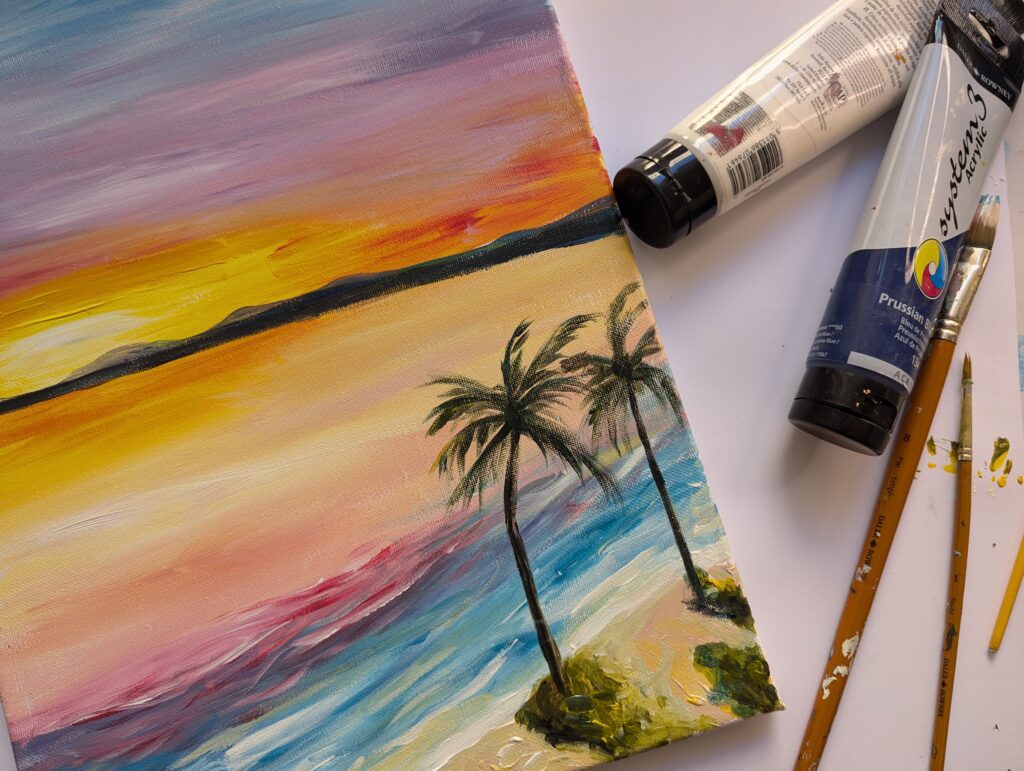
Foundational art gives kids patience, the kind that’s in short supply lately. It gives them a place to reset and relax, a calm way to let their emotions out. It builds real confidence and self-esteem, because they can now make something skilled and show it to other people, and how you respond when they show it to you matters more than you’d think. And it hands them tools they keep for years. Skills don’t expire.
So is “just a hobby” a problem? Not even a little. A hobby that builds patience, focus, confidence, and a skill for life is one of the best things you can give a child. Call it whatever you want. It’s worth it.
Quick questions parents ask me
Does my child need to be talented or “good at drawing” to start?
No. Any child, at any age, can pick up art skills. Art is a skill, and it doesn’t need talent.
What if my child gets frustrated or wants to give up?
Frustration almost always means the level is too hard, or they’re tired of following something step by step. I’ll see whether a different medium or a different type of art suits them better. The aim is to keep it challenging without tipping into overwhelm.
How soon will I actually see progress?
Within a few weeks. Your child should be taking the skills they’ve learned and applying them on their own when they create.
My child only likes drawing one thing, like dragons or horses. Is that a problem?
Not at all. Often it’s a sign they haven’t yet learned to draw what they see rather than what they think. Get the foundational skills in first, then let them pour those skills into whatever they love drawing.
If you’re still on the fence, that’s allowed. But your kid doesn’t have to be “the artistic one” to belong in an art class. They just have to be taught well. That part is my job.
Explore the courses at letsartit.com or join our waitlist and be the first to notified when our kids’ and teens’ art courses open the doors.