
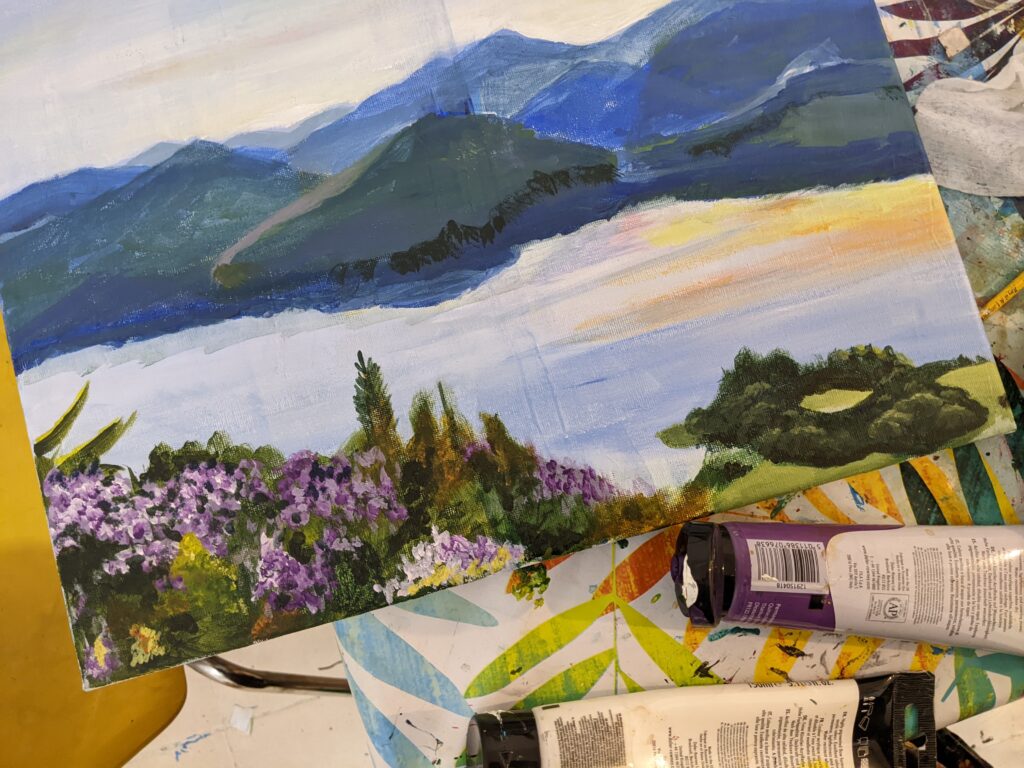
You’re 30 minutes into a painting. It started so well. The first marks were confident. The composition looked promising. You were in the zone.
Then you step back and look at it.
“Oh no. This is terrible.”
The colors are muddy. Nothing looks the way you imagined. That piece that started with so much promise now looks like a mess.
You consider starting over. Or worse—throwing it away and giving up entirely.
Sound familiar?
Welcome to the Messy Middle, and here’s the truth most beginners don’t know: This is exactly where you’re supposed to be.
What Is the Messy Middle?
The Messy Middle is that frustrating phase every creative project goes through—usually around 40-60% complete—where everything looks wrong.
It’s too developed to start over, but too rough to be finished. Your critical eye has woken up and started noticing all the problems, but you haven’t yet developed the solutions.
And it happens to EVERY artist. Even professionals.
The difference? Experienced artists expect it. They know it’s coming. They push through anyway.
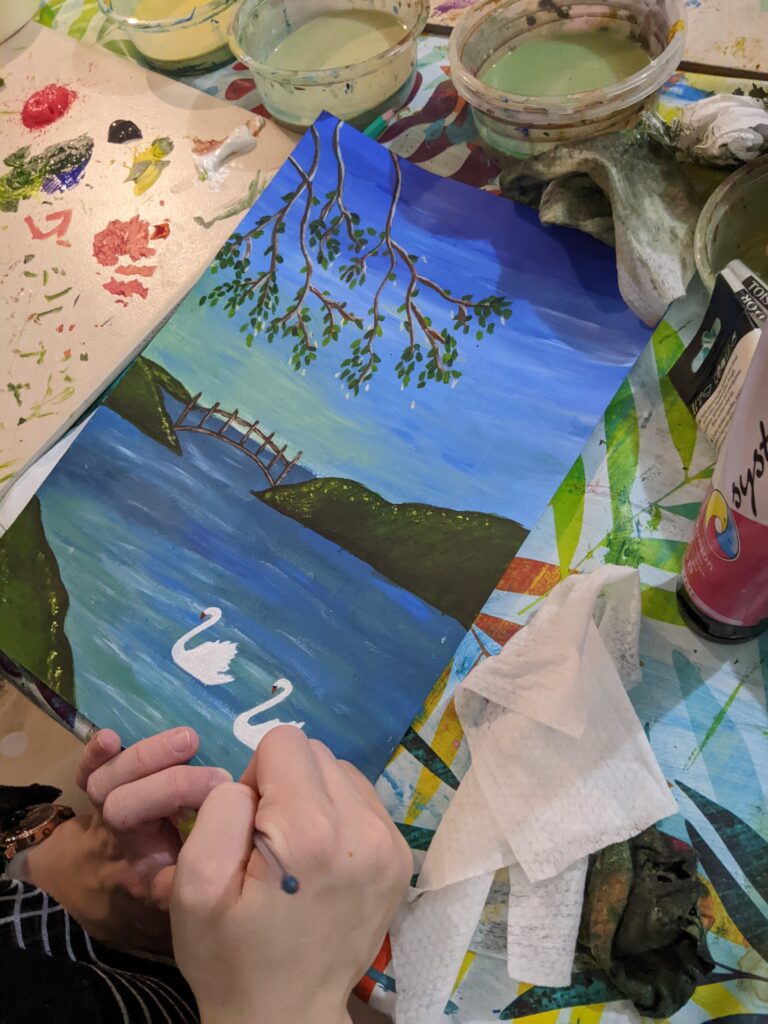
Why the Messy Middle Happens
Here’s what’s really going on when your painting hits that ugly phase:
1. Nothing Is Finished Yet
Your painting is in a state of transition. The background is blocked in but not refined. The details haven’t been added. The values aren’t adjusted. Of course it doesn’t look right—it’s not supposed to yet.
2. Your Critical Eye Wakes Up
At the beginning of a painting, you’re in creative flow, focused on getting ideas down. But halfway through, your analytical brain kicks in and starts comparing what you see to what you imagined. That gap feels enormous.
3. The Vision-Reality Gap Is Most Visible
The Messy Middle is where the distance between your vision and your current skill level is most painfully obvious. This isn’t a sign you should quit—it’s a sign you’re learning and growing.
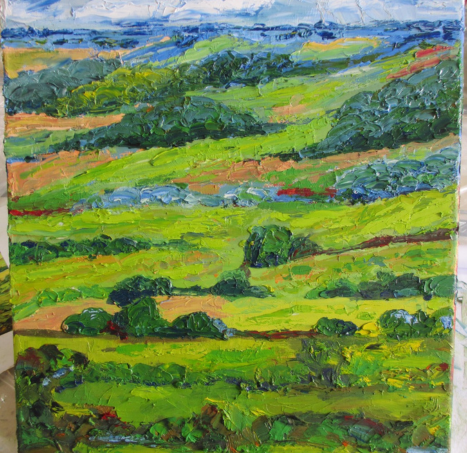
When I teach adult students, we start with very simple paintings that focus on blending and don’t require too many layers. I’ve found that being able to push through the messy middle comes with building your skill set first. If you don’t understand value or can’t mix colors well yet, you won’t even reach the messy middle stage—you’ll get stuck earlier in the process. But when a student does reach that stage and says, “Oh, I don’t like it. It’s not working,” I tell them to trust me. I can see where the painting is headed after we work through the messy middle, and I know the exact steps to guide them there.
And yes, anyone can learn art, read more about not needing talent in this blog post
Free 5-Day Art Challenge
Master the fundamentals of art in 5 days. Stop copying, start creating.
What Professional Artists Know That You Don’t
Here’s what I’ve learned after years of painting and teaching:
Most of the magic happens AFTER the Messy Middle.
When my work starts looking terrible halfway through, I don’t panic anymore. I think: “Ah, right on schedule. This is the ugly phase. Keep going.”
Why? Because I’ve been through it hundreds of times, and I know what comes next:
- The values get adjusted and suddenly there’s depth
- The details get added and forms become clear
- The final touches bring everything together
- That “terrible” painting transforms into something I’m proud of
But this only happens if I don’t give up when it looks bad.
How to Survive the Messy Middle
Next time you’re in the Messy Middle (and there WILL be a next time), here’s what to do:
1. Recognize It
Say to yourself: “Ah, I’m in the Messy Middle. This is supposed to look bad right now. This is part of the process.”
Just naming it takes away its power.
2. Take a Short Break
Step away for 10 minutes. Or a few hours. Or overnight. Give your brain a rest from staring at the “problems.”
Fresh eyes help you see solutions instead of just flaws.
3. Keep Working—Even Though It Still Looks Questionable
This is the hardest part. You have to push through the ugly phase even when you’re not sure it will work out.
Trust that the second half of the painting process is where the transformation happens.
4. Don’t Evaluate Until You’re at Least 80% Done
You can’t judge a painting that’s only half finished. It’s like judging a cake when it’s still batter.
Resist the urge to declare it “terrible” until you’ve actually finished it.
5. Look at It in Black and White
Sometimes when a painting feels “off,” it’s a value problem, not a color problem. Take a photo and convert it to grayscale. Are your lights and darks working? That’s often easier to fix than you think.
The Transformation You’re Missing
Here’s what breaks my heart as a teacher:
Students think beautiful paintings emerge effortlessly.
But here’s the truth: There’s a process to getting to the end. And it needs to be followed through without giving up.
That painting you almost gave up on at 50%? It might have become your favorite piece at 100%.
But only if you don’t quit in the middle.
The students who succeed aren’t the ones with the most natural talent. They’re the ones who learn to push through the Messy Middle.
You may wish to read What I Wish Every Adult Beginner Knew About Learning Art to find out more tips
Your Messy Middle Is a Sign You’re Growing
Here’s something important to remember: The Messy Middle gets less scary the more you experience it.
The first time through, it feels like failure. But by the tenth time, you recognize it as just another phase of the process.
And eventually, you start to trust that what looks terrible now will look completely different in an hour or two.
That’s when you’ve truly grown as an artist—not when you stop hitting the Messy Middle, but when you stop letting it stop you.
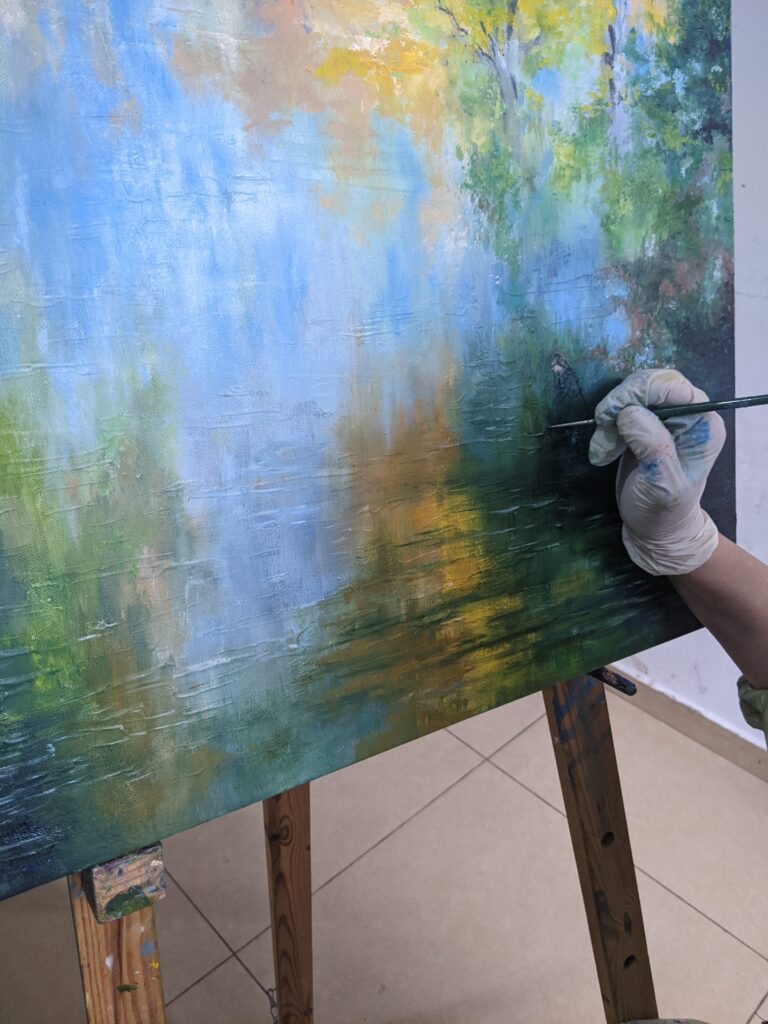
The Bottom Line
Every artist goes through the Messy Middle. EVERY. SINGLE. ONE.
The difference between artists who quit and artists who thrive is simple:
Successful artists expect the Messy Middle. They know it’s coming. And they keep painting anyway.
So the next time you’re halfway through a painting and it looks absolutely terrible, remember:
- This is normal
- This is temporary
- This is part of the process
- The transformation happens when you push through the ugly
- Your breakthrough is waiting on the other side
Don’t quit in the Messy Middle. That’s where all the growth happens.
Want to learn art yourself? Join our beginner’s course waitlist