
Quick Summary: Is Artistic Talent Real?
- The Myth: You are either born an artist or you aren’t.
- The Reality: Art is a skill that can be learned, just like math or reading.
- The Key indicator: Frequent creation in spare time and a love for their craft.
- Next Step: Download our Free PDF: Art Skills by Age Checklist
If you are wondering if your child is talented in art, you aren’t alone. Many parents assume that artistic ability is a “yes or no” trait—you either have the gift, or you don’t. But after years of teaching, I’ve seen the truth: Art is a skill that can be learned. Talent alone means very little if you don’t take the time to develop the necessary techniques.
How can I tell if my child has a natural talent for art?
The most reliable sign of artistic talent is a child’s intrinsic motivation. If your child frequently draws, paints, or crafts in their spare time without being prompted, they have an artistic inclination. Other indicators include a natural eye for color, an interest in composition, and a deep curiosity about how things are made.
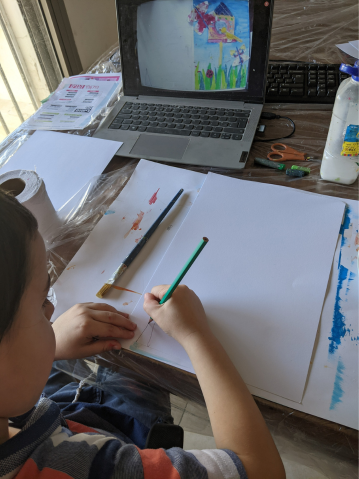
Child following the lessons in Let’sArtit! Littlies course
The “5-Minute Talent Test” (Try This at Home!)
Want to see how your child currently processes visual information? Give them a simple coffee mug and a pencil. Ask them to draw it “from life” (looking at the object, not a picture).
- The “Artist’s Eye”: If they draw the top of the mug as an oval (showing they see perspective), they are already thinking like an artist.
- The “Symbolic” Drawer: If they draw the top as a straight line, they are drawing what they think a cup looks like, rather than what they see.
Both are great! The second group simply hasn’t been taught the “tools of seeing” yet—which is exactly what we do in our online art courses. Try out our Incredible Art camp for a great start to learning skills in art.
Why “Waiting for Talent” is a Mistake
Leaving art to chance is like expecting your child to learn math on their own. Just as we provide structured education for academic subjects, we should do the same for creative pursuits.
The “Age Ten” Wall
By the time children reach age ten, they often become self-critical. If they haven’t had the chance to develop actual skills, they start to believe they aren’t “talented” and give up. By their teens, many lose interest entirely because they think art is a gift they didn’t receive.
Enrolling your child in art lessons early prevents this. It builds their confidence before the self-doubt of the teenage years kicks in. As I discussed in my post on Why Anyone Can Learn to Draw, everyone can master these skills if they are taught the correct methods.
What Skills Should Your Child Be Learning?
Artistic development is a journey. Research from organizations like the National Endowment for the Arts consistently shows that structured arts education improves a child’s problem-solving skills and emotional health.
👉 Click Here to Download the Free PDF: Artistic Milestones & Skills by Age
| Age Group | Focus Area | Goal |
| Ages 5-7 | Exploration & Shapes | Developing fine motor skills and spatial awareness. |
| Ages 8-11 | Foundational Techniques | Shading, basic perspective, and color mixing. |
| Ages 12+ | Mastery & Style | Advanced realism, anatomy, and finding a personal voice. |
The Hidden Benefits of Developing Art Skills
Beyond creating beautiful pictures, art serves as a powerful therapeutic outlet. It allows children to process experiences and feelings that words cannot capture.
Sometimes, the process gets messy—especially during the “middle” of a project. If your child gets frustrated halfway through a drawing, show them my post on The Messy Middle: Why Your Painting Looks Terrible Halfway Through. Understanding that the “ugly stage” is normal is a vital skill for any young artist.
FAQ: Supporting Your Aspiring Artist
Does my child need to show signs of talent to be an artist?
No. Even if your child doesn’t exhibit “natural” signs, they can still become an excellent artist with proper instruction. (Read more in our Parent’s Guide to Developing Your Artistic Child).
How do I find the right lessons?
Look for programs that teach foundational skills rather than just “follow-along” crafts. You want your child to understand why a drawing works.
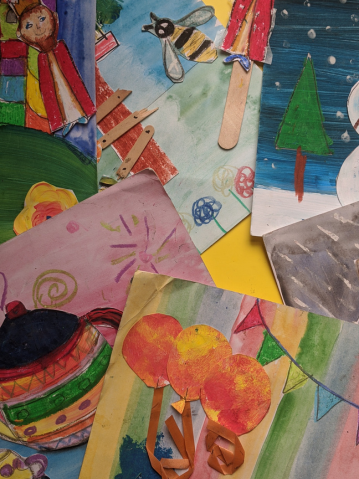
Each project in our Let’sArtit! courses, focuses on teaching a specific skill
Join the Conversation!
I’d love to hear from you! What is the most surprising thing your child has ever drawn? Do they have a “signature” character or a certain color they always use?
Tell me in the comments below! I personally read and respond to every one. If you found this helpful, feel free to share it with a fellow “art parent” who might be wondering if their child is the next Picasso!
Or sign up for our waitlist to be the first to know when our signature art courses open.